Demi AI, Tencent Bungkus “Lü Pao Pao” untuk Drama Pendek
Apa Itu Lü Pao Pao dan Mengapa Tencent Meluncurkannya?
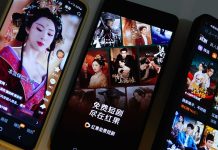
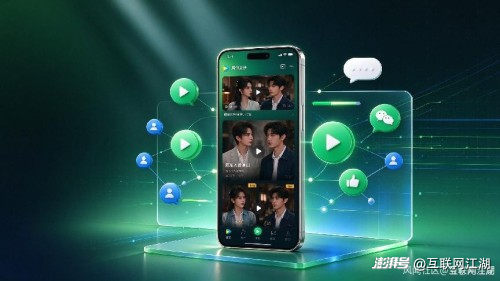
Lü Pao Pao adalah mini program drama pendek gratis yang tumbuh di dalam WeChat, bukan aplikasi mandiri. Slogannya: “Drama bagus gratis, sekali klik langsung tonton.”
Peluncurannya pada Oktober 2026 memicu diskusi hangat—bukan hanya soal produknya, tetapi soal waktu dan niat di baliknya. Di satu sisi, lanskap drama pendek sudah mapan: Hongguo menguasai dengan 168 juta DAU. Di sisi lain, Tencent sedang menaruh hampir seluruh perhatian strategisnya pada AI—belanja modal Q2 2026 melonjak ke 52,78 miliar yuan (+176% YoY), hampir seluruhnya untuk komputasi dan model AI.
Pertanyaannya: mengapa Tencent membuka front baru di jalur yang “sudah melewati puncak dan sudah mapan”?
Bagaimana Lü Pao Pao Berbeda dari Hongguo?
Jawaban singkatnya: Hongguo mengandalkan algoritma distribusi dan aplikasi mandiri; Lü Pao Pao menempel pada ekosistem sosial WeChat.
| Aspek | Hongguo (ByteDance) | Lü Pao Pao (Tencent) |
|---|---|---|
| Bentuk | Aplikasi mandiri | Mini program WeChat |
| Kekuatan | Algoritma distribusi ByteDance | Ekosistem sosial WeChat |
| Fitur khas | Feed imersif, rekomendasi algoritmik | “Ditinonton Teman”, tangga lagu regional |
| Insentif kreator | Berbasis tayangan | Berbasis durasi tontonan per pengguna |
| Status | Fase monetisasi | Fase investasi awal |
Perbedaan paling penting: insentif Lü Pao Pao tidak berbasis jumlah tayangan, melainkan durasi tontonan per pengguna—mendorong kualitas, bukan sekadar流量.
Mengapa Tencent Harus Masuk Drama Pendek Sekarang?
Karena Tencent harus mempertahankan total waktu perhatian pengguna. Data Nomura Securities menunjukkan:
- Agustus 2026: pangsa waktu 50 aplikasi teratas—ByteDance 41,8%, Tencent 28,6%. Selisih 13,2 poin persen.
- Setahun sebelumnya, selisihnya hanya 3,3 poin persen.
- Hongguo: 125 menit per hari per pengguna—melebihi Douyin, WeChat, dan platform video panjang.
- Pangsa waktu Hongguo naik dari 2,2% menjadi 5,9% (+182% YoY).
Erosi waktu pengguna oleh Hongguo mungkin tidak lebih kecil dari dampak Douyin terhadap WeChat dulu. Jadi ini bukan langkah iseng—ini “terpaksa”.
Apa Keunggulan “Pemain Belakangan” Tencent?
Meski Hongguo sudah 5 tahun berdiri, Tencent punya dua keunggulan sebagai pemain belakangan:
- Fase industri bergeser dari “rebut waktu” ke “cari untung”. Dalam sejarah bisnis internet, ini berulang kali terbukti: Fanqie Xiaoshuo mengalahkan Yuewen yang berbayar; Spotify menggusur iTunes; DeepSeek tumbuh cepat saat pesaing sibuk menjaga margin. Hongguo kini mulai monetisasi—membentuk divisi e-commerce April lalu, mengetatkan bagi hasil—sementara Lü Pao Pao masih di fase investasi awal. Tencent bisa memanfaatkan celah waktu.
- Garis waktu dan medan perang bisa lebih panjang. Tencent tidak perlu meniru Hongguo. Ia hanya perlu menyambung “waktu sosial” WeChat dengan “waktu konten” Lü Pao Pao—seperti yang dilakukan Video Account dulu. Video Account tumbuh bukan karena algoritmanya mengalahkan Douyin, tapi karena Tencent berhasil membedah video pendek menjadi salah satu bentuk konten dalam skenario sosial WeChat.
“Jika hanya untuk memperebutkan sedikit perhatian, menghabiskan tenaga besar untuk drama pendek mungkin tidak sepadan. Tapi jika demi model video generation, demi AI—maka segalanya bisa berubah.”
Mengapa Drama Pendek Penting untuk Strategi AI Tencent?
Karena drama pendek adalah salah satu skenario paling mudah untuk validasi dan monetisasi video generation model.
Teknologi video AI tidak bisa diuji hanya dengan demo laboratorium. Drama pendek menyediakan kebutuhan生成 nyata yang masif, berkelanjutan, dan berintensitas tinggi—sesuatu yang tidak bisa digantikan data laboratorium mana pun. Ini seperti autonomous driving: perusahaan dengan teknologi terkuat bukan yang闷头研发, tapi yang punya banyak produk di jalan.
Hari ini, lebih dari 90% proses produksi drama pendek sudah menggunakan AI—dipanggil, diiterasi, dan dikoreksi berulang kali pada skala pengguna nyata. Untuk model Hunyuan, ini sangat berharga.
Dari sisi monetisasi, drama pendek juga merupakan skenario tercepat untuk mengubah teknologi AI menjadi uang. Contohnya: drama AI live-action 《影后芽芽》 selama uji coba Lü Pao Pao menembus ratusan juta tayangan dalam 3 hari, puncak 2 juta pengguna online bersamaan, durasi tontonan per pengguna lebih dari 30 menit, dan pendapatan iklan mencapai jutaan yuan—sebelum produk resmi diluncurkan.
Apakah Ini Bagian dari Strategi “Product Wins” Tencent?
Ya. Sejak WorkBuddy meledak, Tencent makin agresif di berbagai arah AI—termasuk video generation. Ada perubahan gaya yang menarik: Tencent menjadi lebih agresif daripada sebelumnya.
Alasannya bukan hanya pentingnya AI, tetapi juga karena kompetisi AI akhirnya kembali ke “zona nyaman” Tencent: produk. QQ, WeChat, Honor of Kings, Delta Force—satu demi satu hit di bidang sosial dan game. Di era AI, WorkBuddy adalah produk AI pertama Tencent yang benar-benar meledak.
Tapi satu WorkBuddy tidak cukup. Berikutnya, Tencent butuh hit di video generation dan ChatBot. Untuk itu, model video Hunyuan perlu mendarat dan menemukan ruang monetisasi—dan drama pendek adalah jalur yang perlu diperhatikan.
Apa Peran Drama Pendek bagi Bisnis Lama Tencent?
Drama pendek adalah tuas untuk merekonstruksi seluruh ekosistem konten Tencent dengan AI. Bagi raksasa teknologi, yang paling sulit bukan melahirkan produk baru di era AI, tetapi menemukan jalan baru bagi bisnis lama.
Dari sisi struktur bisnis, Tencent masih salah satu pengiklan internet terbesar. Pendapatan iklan Tencent semester I 2026: 81,7 miliar yuan (+20,9%), dengan pangsa pasar 15–20%—penopang arus kas saat WorkBuddy mendaki di era AI.
- Jika AI + drama pendek berhasil secara komersial, apakah bisnis video generation Tencent di bidang video panjang juga punya lebih banyak peluang monetisasi?
- Apakah rantai monetisasi dari IP novel web Yuewen ke drama pendek AI menjadi lebih lengkap?
Jawabannya: mungkin ya. Drama pendek bagi iklan Tencent bukan sekadar kategori konten, tetapi juga inventaris iklan baru dan skenario penempatan iklan yang tumbuh cepat.
Apa Kesimpulan dan Arah ke Depan?
Dari perspektif transisi raksasa teknologi di era AI, langkah Tencent masuk drama pendek hanyalah potret kecil. Tapi potret ini mencerminkan realitas objektif: logika dasar Tencent perlu berubah.
Ke depan, Tencent perlu bertransformasi dari dua pilar “iklan + game” menuju kurva baru berbasis model, komputasi, dan agent. Bukan berarti iklan dan game kehilangan kepentingan—tetapi keduanya tidak lagi menjadi garis dasar yang mendefinisikan Tencent. Yang benar-benar mendefinisikan Tencent mungkin adalah kemampuan AI merekonstruksi produksi, distribusi, dan monetisasi konten, serta infrastruktur AI yang diekspor ke luar.
Bagaimana Tencent mendefinisikan masa depan di era AI? Layak ditunggu.
What Is Lü Pao Pao and Why Did Tencent Launch It?
Lü Pao Pao is a free short-drama mini program that lives inside WeChat—not a standalone app. Its slogan: “Good dramas for free, one tap to watch.”
Its October 2026 launch sparked heated discussion—not just about the product, but about its timing and underlying intent. On one hand, the short-drama landscape is already settled: Hongguo dominates with 168 million DAU. On the other, Tencent is pouring almost all of its strategic attention into AI—Q2 2026 capital expenditure surged to 52.78 billion yuan (+176% YoY), almost entirely for AI compute and model iteration.
The question: why is Tencent opening a new front in a track that has “already passed its peak and is already settled”?
How Does Lü Pao Pao Differ from Hongguo?
The short answer: Hongguo relies on distribution algorithms and a standalone app; Lü Pao Pao attaches to WeChat’s social ecosystem.
| Aspect | Hongguo (ByteDance) | Lü Pao Pao (Tencent) |
|---|---|---|
| Form | Standalone app | WeChat mini program |
| Strength | ByteDance distribution algorithm | WeChat social ecosystem |
| Signature feature | Immersive feed, algorithmic recommendations | “Friends are watching”, regional rankings |
| Creator incentive | Based on views | Based on watch duration per user |
| Status | Monetization phase | Early investment phase |
The most important difference: Lü Pao Pao’s incentives are not based on view counts, but on watch duration per user—encouraging quality over volume.
Why Must Tencent Enter Short Drama Now?
Because Tencent must defend total user attention time. Nomura Securities data shows:
- August 2026: time share of top 50 apps—ByteDance 41.8%, Tencent 28.6%. The gap is 13.2 percentage points.
- A year earlier, the gap was only 3.3 percentage points.
- Hongguo: 125 minutes per day per user—exceeding Douyin, WeChat, and long-video platforms.
- Hongguo’s time share rose from 2.2% to 5.9% (+182% YoY).
Hongguo’s erosion of user time is likely no smaller than Douyin’s impact on WeChat in the past. So this is not a whimsical move—it is “forced.”
What Is Tencent’s “Latecomer Advantage”?
Though Hongguo has been around for 5 years, Tencent has two advantages as a latecomer:
- The industry is shifting from “grabbing time” to “seeking profit.” In internet business history, this has been proven repeatedly: Fanqie Xiaoshuo overtook paid Yuewen; Spotify displaced iTunes; DeepSeek grew rapidly while competitors focused on margins. Hongguo is now beginning monetization—forming an e-commerce division in April, tightening revenue sharing—while Lü Pao Pao is still in its early investment phase. Tencent can exploit the timing gap.
- The timeline and battlefield can be longer. Tencent doesn’t need to copy Hongguo. It only needs to seamlessly connect WeChat’s “social time” with Lü Pao Pao’s “content time”—as it did with Video Account. Video Account grew not because its algorithm beat Douyin, but because Tencent successfully dissected short video into a content form within WeChat’s social scenarios.
“If it were only about competing for a bit of attention, spending great effort on short drama might not be worth it. But if it is for the video generation model, for AI—then everything could change.”
Why Is Short Drama Important for Tencent’s AI Strategy?
Because short drama is one of the easiest scenarios for validating and monetizing video generation models.
AI video technology cannot be tested with lab demos alone. Short drama provides massive, continuous, high-intensity real generation needs—something no lab data can replace. It’s like autonomous driving: the companies with the strongest technology are not those buried in R&D, but those with many products on the road.
Today, over 90% of the short drama production process already uses AI—called, iterated, and corrected repeatedly at real user scale. For the Hunyuan model, this is extremely valuable.
From a monetization standpoint, short drama is also the fastest scenario to turn AI technology into money. For example: the AI live-action drama 《影后芽芽》 during Lü Pao Pao’s beta test broke hundreds of millions of views in 3 days, peaked at 2 million concurrent users, achieved over 30 minutes watch duration per user, and generated millions of yuan in ad revenue—before the product officially launched.
Is This Part of Tencent’s “Product Wins” Strategy?
Yes. Since WorkBuddy took off, Tencent has become more aggressive across AI directions—including video generation. There is an interesting style change: Tencent has become more aggressive than before.
The reason is not only AI’s importance, but also because AI competition has finally returned to Tencent’s “comfort zone”: products. QQ, WeChat, Honor of Kings, Delta Force—one hit after another in social and gaming. In the AI era, WorkBuddy is Tencent’s first truly explosive AI product.
But one WorkBuddy is not enough. Next, Tencent needs hits in video generation and ChatBot. For that, the Hunyuan video model needs to land and find monetization space—and short drama is a path worth focusing on.
What Role Does Short Drama Play for Tencent’s Legacy Business?
Short drama is a lever to reconstruct Tencent’s entire content ecosystem with AI. For tech giants, the hardest thing is not birthing new products in the AI era, but finding a new path for legacy businesses.
From a business structure standpoint, Tencent is still one of the largest internet advertisers. Tencent’s H1 2026 ad revenue: 81.7 billion yuan (+20.9%), with 15–20% market share—the cash flow anchor while WorkBuddy climbs in the AI era.
- If AI + short drama succeeds commercially, does Tencent’s video generation business in long-form video also have more monetization opportunities?
- Does the monetization chain from Yuewen web novel IP to AI short drama become more complete?
The answer: possibly yes. Short drama for Tencent’s advertising is not just a content category, but also a fast-growing new ad inventory and placement scenario.
What Is the Conclusion and the Road Ahead?
From the perspective of a tech giant’s AI-era transition, Tencent’s entry into short drama is just a small microcosm. But this microcosm reflects an objective reality: Tencent’s underlying logic needs to change.
Going forward, Tencent needs to transform from its dual pillars of “advertising + gaming” toward a new curve built on models, compute, and agents. This is not to say advertising and gaming lose importance—but they will no longer be the baseline that defines Tencent. What truly defines Tencent may be the ability of AI to reconstruct content production, distribution, and monetization, as well as AI infrastructure exported externally.
How will Tencent define the future in the AI era? Worth watching.
什么是绿泡泡?腾讯为何上线?
绿泡泡是一款生长在微信内的免费短剧小程序,并非独立App。口号是:“免费好剧,一点就看”。
2026年10月上线引发热议——不仅在于产品本身,更在于出现的时机与背后的意图。一方面,短剧格局初定:红果以1.68亿日活称霸。另一方面,腾讯正把绝大部分战略注意力压在AI上——2026年Q2资本开支飙至527.8亿元(同比+176%),几乎全部投向AI算力与模型迭代。
问题来了:为何腾讯在”热度高峰已过、格局初定”的赛道再开战线?
绿泡泡与红果有何不同?
简而言之:红果依赖算法分发与独立App;绿泡泡依附微信社交生态。
| 维度 | 红果(字节) | 绿泡泡(腾讯) |
|---|---|---|
| 形态 | 独立App | 微信小程序 |
| 优势 | 字节算法分发 | 微信社交生态 |
| 特色功能 | 沉浸式信息流、算法推荐 | “朋友在看”、地区热榜 |
| 创作者激励 | 以播放量为核心 | 以人均播放时长为核心 |
| 阶段 | 商业化变现期 | 早期投入期 |
最关键的区别:绿泡泡的激励不以播放量为核心,而是以人均播放时长为核心——引导质量而非流量。
腾讯为何必须现在入局短剧?
因为腾讯必须守住用户总时长。野村证券数据显示:
- 2026年8月:Top 50应用时长份额——字节系41.8%,腾讯系28.6%。差距13.2个百分点。
- 一年前,差距仅3.3个百分点。
- 红果:人均单日125分钟——超过抖音、微信及长视频平台。
- 红果时长份额从2.2%跃升至5.9%(同比+182%)。
红果对用户时长的侵蚀,可能不比当年抖音对微信的影响小。所以这不是心血来潮——而是“不得已而为之”。
腾讯的”后发优势”是什么?
虽然红果已成立5年,但腾讯作为后来者拥有两大优势:
- 行业从”抢时长”转向”要利润”。互联网商业史反复验证:番茄小说用免费反超付费的阅文;Spotify用免费流媒体瓦解iTunes;DeepSeek在对手保利润的窗口期快速增长。红果已开始商业化——4月设立独立电商部门、收紧分账——而绿泡泡仍在早期投入阶段。腾讯可以打时间差。
- 战线和时间可以拉得更长。腾讯不需复制红果,只需把微信”社交时长”与绿泡泡”内容时长”无缝衔接——就像视频号当年那样。视频号能成长,不是因为算法超过抖音,而是腾讯成功把短视频拆解为微信社交场景中的内容形态。
“如果只为争那点注意力,花大力气做短剧可能不划算。但如果为了视频生成模型、为了AI——那么一切可能就不一样了。”
短剧为何对腾讯AI战略如此重要?
因为短剧是视频生成模型技术验证与商业化变现最容易的场景之一。
AI视频技术靠实验室demo测不出来。短剧提供了海量、连续、高强度的真实生成需求——任何实验室数据都弥补不了。这就像自动驾驶:技术最强的企业不是闷头研发的,而是有大量上路产品的玩家。
今天,短剧生产环节AI渗透率已超90%——在真实用户规模下被反复调用、迭代和纠错。对混元模型而言,这极有价值。
从商业化角度看,短剧也是AI技术变现最快的场景。例如:绿泡泡灰度测试期间,AI仿真人短剧《影后芽芽》上线3天播放破数亿,峰值同时在线超200万,人均观看超30分钟,广告收入达数百万元——产品尚未正式上线。
这是否是腾讯”产品制胜”战略的延续?
是的。WorkBuddy跑出来后,腾讯在AI各方向都加大投入——视频生成也不例外。一个有意思的变化:腾讯变得比以前更激进。
原因不仅是AI本身的重要性,更因为AI竞争终于回到腾讯的”舒适区”:产品。QQ、微信、王者荣耀、三角洲——社交与游戏领域一个接一个爆款。AI时代,WorkBuddy是腾讯第一个真正意义上的AI爆款。
但一个WorkBuddy显然不够。接下来,视频生成和ChatBot领域,腾讯都需要爆款。为此,混元视频模型需要落地、找到商业化空间——短剧就是需要重点布局的赛道。
短剧对腾讯旧业务意味着什么?
短剧是用AI重构整个腾讯内容生态的关键杠杆。对巨头而言,真正难的不是在AI时代孵化新产品,而是为旧业务找到新路。
从业务结构看,腾讯依然是最大的互联网广告商之一。2026上半年腾讯广告收入817亿元(+20.9%),市场份额15–20%——是WorkBuddy向上突破AI时,旧业务持续托底的现金流压舱石。
- 如果AI+短剧商业跑通,腾讯长视频领域的AI视频生成业务是否也有更多变现可能?
- 阅文网文IP到AI短剧的变现链条是否更完整?
答案是:有可能。短剧对腾讯广告而言,不只是内容品类,更是快速增长的新增广告库存与投放场景。
结论与未来方向是什么?
从巨头AI时代转向的角度看,腾讯下场短剧只是一个很小的缩影。但这个缩影反映出一个客观现实:腾讯的底层逻辑需要改变。
未来的腾讯,需要从“广告+游戏”二元支柱,逐步长出一条以模型、算力和智能体为底座的新曲线。这不是说广告和游戏不重要了——而是它们将不再是定义腾讯的基准线。真正定义腾讯的,可能是AI重构内容生产、分发和变现的能力,以及对外输出的AI基础设施。
AI时代腾讯将如何定义未来?值得期待。